
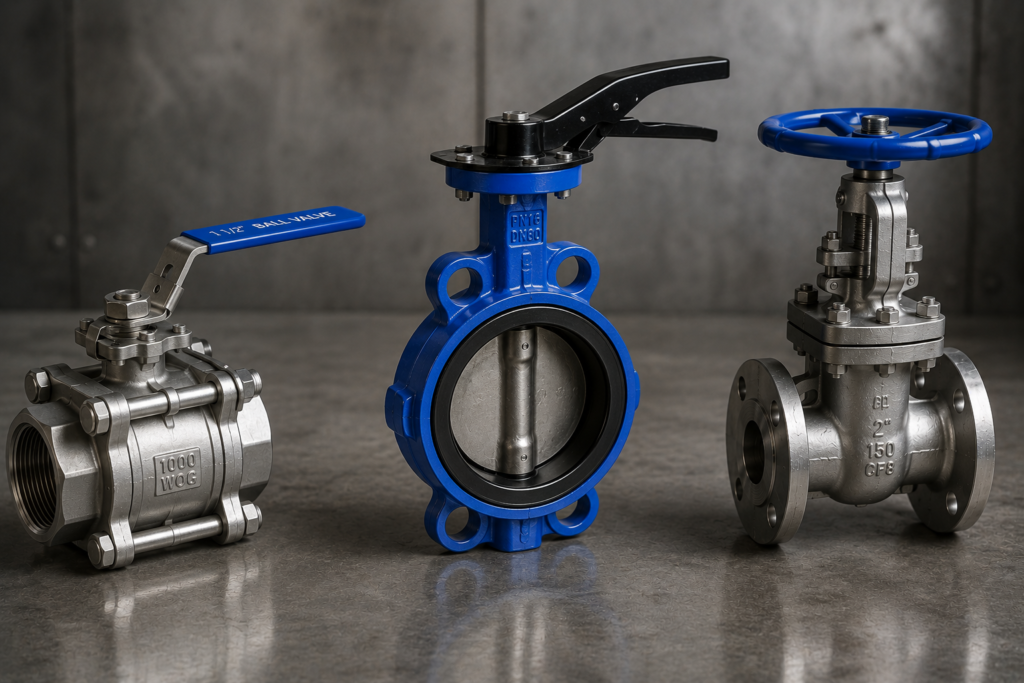
Industrial valves play a vital role in modern processing systems by controlling the flow of liquids, gases, steam, and corrosive media across various industries. From oil & gas plants to water treatment facilities, industrial valves are essential for maintaining operational safety, process efficiency, and reliable performance. As industries continue to adopt automation and high-performance process systems, the demand for durable and precision-engineered industrial valves is rapidly increasing.
What Are Industrial Valves?
Industrial valves are mechanical devices designed to regulate, direct, or stop the flow of fluids within a piping system. These valves help industries control pressure, temperature, and flow rate in critical applications. Depending on the operating requirement, different types of valves are used for isolation, throttling, or automated control.
Industrial valves are commonly manufactured using materials such as stainless steel, carbon steel, cast iron, bronze, UPVC, and special alloy materials for corrosive or high-temperature environments.
Importance of Industrial Valves in Process Industries
Efficient valve systems are essential for maintaining safe and uninterrupted industrial operations. High-quality industrial valves help improve process control, reduce leakage risks, and enhance system reliability.
Key benefits include:
- Accurate flow control
- Leak-proof operation
- High pressure and temperature resistance
- Long service life
- Reduced maintenance requirements
- Improved plant safety
- Automation compatibility
Industries depend on reliable valve solutions to ensure smooth production processes and minimize downtime.
Types of Industrial Valves
Different industrial applications require different valve designs. Some of the most commonly used industrial valves include:
Ball Valves
Ball valves are widely used for quick shut-off applications. These valves provide tight sealing, easy operation, and reliable performance in high-pressure systems. They are commonly used in oil & gas, chemical, and water industries.
Butterfly Valves
Butterfly valves are compact, lightweight, and ideal for large pipeline systems. These valves are widely used in HVAC systems, water treatment plants, and industrial processing applications.
Gate Valves
Gate valves are primarily used for full-flow isolation applications. They are suitable for high-pressure pipelines where minimal flow restriction is required.
Globe Valves
Globe valves are designed for precise flow regulation and throttling applications. These valves are commonly used in steam systems and process control industries.
Check Valves
Check valves prevent reverse flow in pipelines and protect pumps, compressors, and processing equipment from damage.
Knife Edge Gate Valves
Knife edge gate valves are specially designed for slurry, pulp, and viscous fluid applications where solid particles are present.
Automated Industrial Valve Solutions
Modern industries increasingly use automated valve systems to improve process efficiency and reduce manual operation. Pneumatic actuators and electric actuators are integrated with industrial valves for remote-controlled automation systems.
Automated valves offer:
- Faster operation
- Remote monitoring
- Reduced labor costs
- Improved process accuracy
- Enhanced plant safety
Automation solutions are widely used in power plants, petrochemical industries, pharmaceutical plants, and hazardous industrial environments.
Applications of Industrial Valves
Industrial valves are used across a wide range of industries including:
Oil & Gas Industry
Valves control crude oil, natural gas, and petrochemical processing operations under high pressure and temperature conditions.
Water Treatment Plants
Industrial valves regulate water distribution, filtration, desalination, and wastewater treatment systems.
Chemical Processing Industry
Specialized corrosion-resistant valves are used for handling aggressive chemicals and hazardous fluids.
Power Generation Plants
High-performance valves help control steam, cooling water, and fuel systems in thermal and power plants.
Food & Pharmaceutical Industry
Sanitary valve systems maintain hygiene and process control in food processing and pharmaceutical manufacturing facilities.
Features of High-Quality Industrial Valves
Reliable industrial valves are designed with advanced engineering and strict quality standards.
Important features include:
- Corrosion resistance
- High pressure tolerance
- Durable sealing performance
- Low maintenance
- Automation compatibility
- Precision machining
- Long operational life
Selecting the right valve improves system efficiency and operational reliability.
Why Choose a Trusted Industrial Valve Manufacturer?
Choosing a reliable industrial valve manufacturer is important for long-term performance and safety. Experienced manufacturers provide high-quality products, technical support, customized solutions, and international standard compliance.
A trusted manufacturer offers:
- Advanced manufacturing technology
- Strict quality testing
- Custom valve solutions
- Fast delivery
- Technical expertise
- Global supply capability
Industries worldwide prefer manufacturers that deliver durable and efficient valve automation solutions.
Future of Industrial Valve Automation
The industrial valve sector is rapidly evolving with smart automation technologies. Modern valve systems now integrate with PLC, SCADA, and IoT-based monitoring systems for real-time process control.
Future trends include:
- Smart valve monitoring
- Predictive maintenance
- Energy-efficient actuators
- Remote diagnostics
- AI-based process optimization
Industrial automation will continue to increase the demand for high-performance valves and advanced actuator systems.
Conclusion
Industrial valves are the backbone of modern fluid control systems across multiple industries. From basic flow isolation to advanced automated process control, industrial valves ensure safety, efficiency, and reliable operation in demanding industrial environments.
As industries move toward advanced automation and smarter processing systems, the importance of durable, precision-engineered industrial valves continues to grow. Choosing high-quality industrial valve solutions helps businesses improve operational performance, reduce downtime, and achieve long-term reliability in critical industrial applications.