
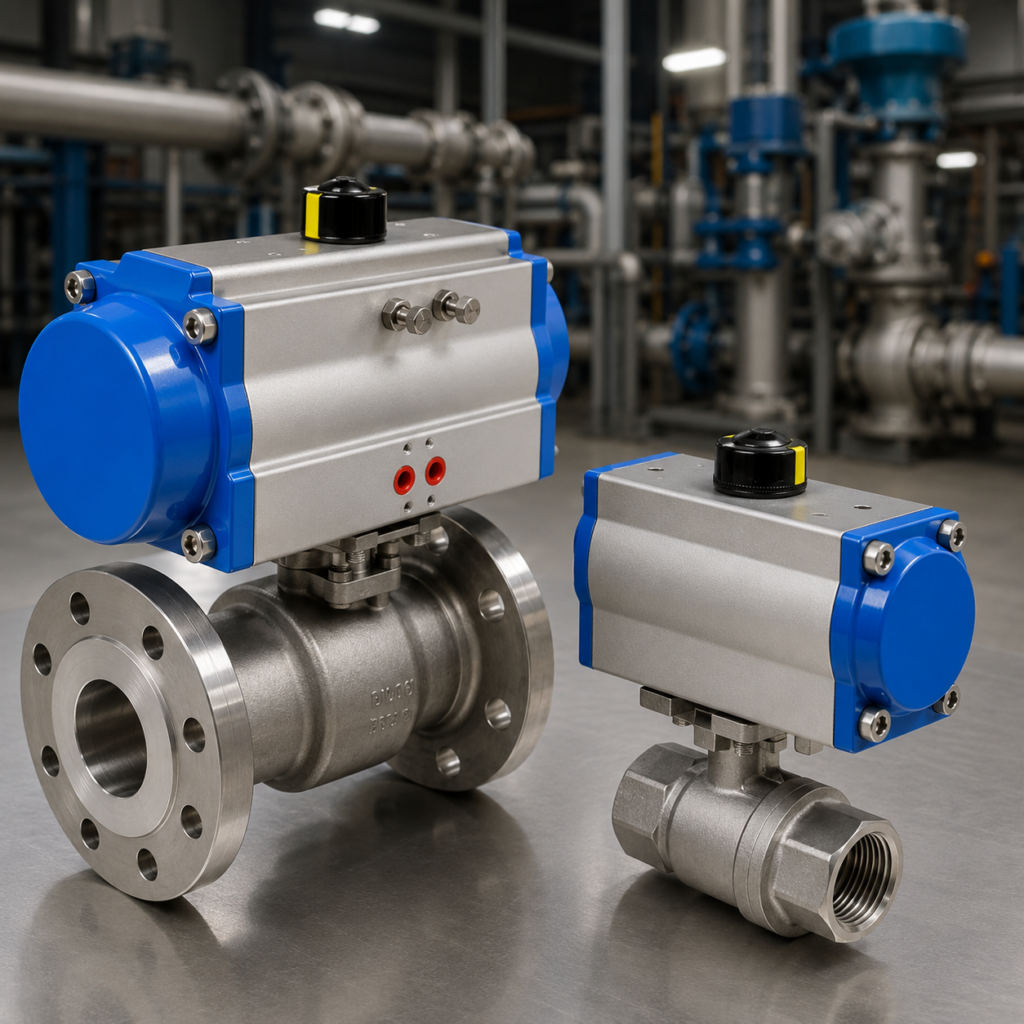
Modern industries depend on automation to improve productivity, safety, and operational efficiency. One of the most important parts of this transformation is Industrial Valve Automation in India, where manual valves are replaced with automated systems that provide accurate, reliable, and remote-controlled flow management. From chemical processing and pharmaceuticals to water treatment and power generation, automated valves help industries reduce downtime, increase process efficiency, and improve workplace safety.
Valve automation combines industrial valves with actuators, sensors, and control systems to perform opening, closing, or regulating operations without manual intervention. Whether a plant uses pneumatic, electric, or hydraulic actuation, automated valve systems provide consistent performance while reducing human error and maintenance costs.
In this guide, you’ll learn how valve automation works, its key components, benefits, applications, and how to select the right solution for your industrial process.
What is Industrial Valve Automation?
Industrial Valve Automation is the process of operating industrial valves automatically using actuators and control systems instead of manual handwheels or levers. These systems receive signals from PLCs, DCS, SCADA, or other process control equipment and operate valves with precision based on production requirements.
Automation allows industries to monitor and control fluid flow remotely, improving both operational efficiency and plant safety. Today, industries are increasingly investing in Valve Automation Solutions to meet higher production demands while minimizing operational risks.
How Valve Automation Works
The working principle of valve automation is straightforward yet highly effective.
First, a controller such as a PLC or DCS sends an electrical or pneumatic command to the actuator. The actuator converts this signal into mechanical movement, which rotates or moves the valve stem. Depending on the valve type, the disc, ball, or gate opens, closes, or regulates the flow of media through the pipeline.
Position feedback devices continuously monitor valve status and communicate with the control system, ensuring accurate operation throughout the process.
A typical automated valve system consists of:
- Industrial Valve
- Actuator
- Solenoid Valve
- Positioner
- Limit Switch
- Air Filter Regulator (AFR)
- PLC or DCS Controller
- Position Feedback Sensor
Working together, these components create reliable Automated Valve Systems capable of operating 24/7 with minimal human intervention.
Types of Valve Actuators
Selecting the correct actuator depends on the application, operating conditions, and available utilities.
Pneumatic Actuated Valves
Pneumatic Actuated Valves use compressed air to operate industrial valves. They are widely used because of their fast response, high reliability, and suitability for hazardous environments.
Advantages include:
- Fast opening and closing
- Low operating cost
- Explosion-proof operation
- High cycle life
- Ideal for process industries
These valves are commonly installed in chemical plants, oil & gas facilities, pharmaceutical manufacturing, and water treatment systems.
Electric Actuated Valves
Electric Actuated Valves use electric motors to operate the valve mechanism. They are preferred where compressed air is unavailable or where precise positioning is required.
Benefits include:
- Accurate flow control
- Remote operation
- Easy integration with automation systems
- Energy-efficient performance
- Suitable for modulating applications
Electric actuators are commonly used in HVAC systems, power plants, water treatment facilities, and food processing industries.
Benefits of Valve Automation
Industrial automation provides significant advantages compared to manual valve operation.
Some key benefits include:
- Improved process efficiency
- Enhanced workplace safety
- Reduced manpower requirements
- Accurate flow control
- Faster response time
- Lower maintenance costs
- Better production consistency
- Remote monitoring and operation
- Reduced downtime
- Increased equipment reliability
These advantages make Process Automation an essential investment for modern manufacturing facilities.
Why Choose MD Valves for Industrial Valve Automation?
When selecting a valve automation partner, product quality, engineering expertise, and long-term reliability are just as important as price. At MD Valves, we specialize in manufacturing high-performance industrial valves and automation solutions that are designed to meet the requirements of modern process industries. As an experienced Industrial Valves Manufacturer in Ahmedabad, we offer a complete range of Pneumatic Actuated Valves, Electric Actuated Valves, Ball Valves, Butterfly Valves, Control Valves, and customized Valve Automation Solutions for diverse industrial applications.
Every product is manufactured using premium-quality materials and undergoes stringent quality inspections to ensure dependable performance, leak-proof operation, and extended service life. Our engineering team works closely with customers to recommend the most suitable automation system based on operating pressure, temperature, media, and application requirements. With timely delivery, responsive technical support, and a strong reputation as an Industrial Valves Supplier in India, MD Valves is committed to helping industries improve efficiency, safety, and process reliability through advanced Industrial Valve Automation solutions.
Applications of Automated Valve Systems
Automated valves are used across numerous industries where precision flow control is essential.
Major applications include:
- Chemical Processing
- Pharmaceutical Manufacturing
- Water & Wastewater Treatment
- Oil & Gas
- Power Generation
- Food & Beverage
- Mining & Minerals
- Sugar Plants
- Marine Industry
- Paper & Pulp
- HVAC Systems
- Textile Manufacturing
As industrial processes become more advanced, the demand for reliable Smart Valve Systems continues to grow.
How to Choose the Right Valve Automation Solution
Choosing the correct automation system requires evaluating several technical factors.
Consider the following before selecting an automated valve:
- Type of process media
- Operating pressure
- Temperature range
- Valve size
- Flow characteristics
- Required torque
- Available power source
- Safety requirements
- Environmental conditions
- Control system compatibility
Working with an experienced engineering team ensures that every component is properly matched for long-term reliability and optimum performance.
The Growing Demand for Valve Automation in India
The adoption of Valve Automation in India has increased rapidly due to industrial expansion, smart manufacturing initiatives, and higher safety standards. Industries are replacing manually operated valves with automated solutions to improve productivity and reduce operational costs.
Chemical plants, refineries, pharmaceutical companies, water treatment facilities, and power stations are investing heavily in advanced automation technologies to achieve better process control and regulatory compliance.
This growing demand has encouraged manufacturers to develop more efficient, intelligent, and durable valve automation products for domestic and international markets.
Choosing a Reliable Automation Partner
Selecting the right supplier is just as important as choosing the right product. A trusted Industrial Valves Manufacturer in Ahmedabad can provide engineering expertise, customized solutions, and dependable after-sales support for projects of all sizes.
Likewise, working with an experienced Industrial Valves Supplier in India ensures access to quality-certified products, timely deliveries, and technical guidance throughout the project lifecycle. Reliable manufacturers also conduct rigorous quality testing to ensure every automated valve performs consistently under demanding operating conditions.
Future of Industrial Valve Automation
The future of industrial automation is becoming increasingly intelligent. Modern facilities are integrating IoT connectivity, predictive maintenance, digital monitoring, and AI-based analytics into valve automation systems.
These innovations allow operators to monitor valve health in real time, identify potential failures before they occur, and optimize maintenance schedules. As Industry 4.0 adoption continues to grow, Smart Valve Systems will play an even greater role in improving efficiency, sustainability, and operational reliability across industrial plants.
Conclusion
Industrial valve automation has become a critical component of modern manufacturing by improving safety, efficiency, and process reliability. Whether using pneumatic or electric actuators, automated systems help industries achieve precise control while reducing operational costs and downtime.
As Industrial Valve Automation in India continues to expand, businesses are increasingly adopting advanced automation technologies to remain competitive. Choosing high-quality automated valves from an experienced manufacturer ensures long-term performance, dependable operation, and better return on investment. Whether your application involves chemical processing, water treatment, pharmaceuticals, power generation, or other industrial sectors, investing in the right valve automation solution is a smart step toward safer and more efficient operations.