
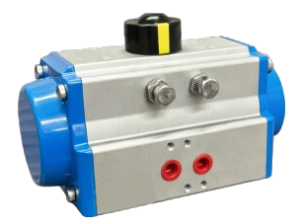
In modern industries, automation plays a critical role in improving efficiency, safety, and productivity. One of the most important components used in automated valve systems is the Pneumatic Actuator. Industries such as oil & gas, chemical processing, water treatment, pharmaceuticals, food processing, and power generation rely heavily on automated valves for precise flow control. A Pneumatic Actuator provides reliable and fast valve operation, making it one of the most preferred solutions for industrial valve automation.
A Pneumatic Actuator uses compressed air to operate valves automatically. It converts pneumatic energy into mechanical motion, allowing valves to open, close, or modulate without manual intervention. Due to its simple design, high reliability, and low maintenance requirements, the Pneumatic Actuator has become an essential component in industrial automation systems.
What Is a Pneumatic Actuator?
A Pneumatic Actuator is a mechanical device that uses compressed air pressure to generate motion. It is commonly installed on industrial valves such as butterfly valves, ball valves, plug valves, and control valves. The actuator automates valve operation and eliminates the need for manual handling.
The two most common types of Pneumatic Actuator systems are:
- Double Acting Pneumatic Actuator
- Spring Return Pneumatic Actuator
A Double Acting Pneumatic Actuator uses air pressure for both opening and closing operations, while a Spring Return Pneumatic Actuator uses compressed air in one direction and spring force in the other.
These actuators are widely used in industrial automation because they provide fast response times and reliable operation in demanding environments.
Fast and Efficient Valve Operation
One of the major reasons industries prefer a Pneumatic Actuator is its fast operating speed. Industrial processes often require quick valve movement to maintain system efficiency and process control. Pneumatic systems respond rapidly because compressed air can instantly generate motion.
Compared to manual operation, a Pneumatic Actuator significantly reduces operational delays. This fast response is especially important in emergency shutdown systems, chemical dosing applications, and high-speed production lines where immediate valve action is required.
The ability of a Pneumatic Actuator to perform rapid opening and closing operations improves overall plant productivity and minimizes downtime.
Reliable Performance in Harsh Environments
Industrial facilities often operate under challenging conditions such as high temperatures, dust, moisture, chemicals, and corrosive environments. A Pneumatic Actuator is highly reliable in such conditions because it has a robust construction and fewer electrical components.
Unlike electric actuators, a Pneumatic Actuator is less sensitive to overheating and electrical failures. This makes pneumatic systems highly dependable for hazardous and heavy-duty industrial applications.
Industries dealing with flammable gases and explosive atmospheres commonly choose a Pneumatic Actuator because compressed air operation reduces ignition risks and improves operational safety.
Low Maintenance Requirements
Another key advantage of a Pneumatic Actuator is its low maintenance requirement. Pneumatic systems have a simple design with fewer moving parts, which minimizes wear and tear over time.
A properly maintained Pneumatic Actuator can operate efficiently for years with minimal servicing. Routine lubrication and air filtration are generally sufficient to maintain reliable performance.
The low maintenance cost of a Pneumatic Actuator makes it a cost-effective solution for industries seeking long-term operational efficiency and reduced maintenance downtime.
Ideal for Industrial Valve Automation
Automation is essential for modern industries aiming to improve productivity and process accuracy. A Pneumatic Actuator allows industries to automate valve operations with high precision and repeatability.
By integrating a Pneumatic Actuator with control systems, industries can remotely monitor and operate valves from centralized control rooms. This reduces manual labor and enhances process efficiency.
Industrial plants use a Pneumatic Actuator for:
- Automated flow control
- Emergency shutdown systems
- Process automation
- Batch processing systems
- Remote valve operation
The flexibility and automation capabilities of a Pneumatic Actuator make it ideal for both on-off and modulating valve applications.
MD Valves Pneumatic Actuator
MD Valves equipped with Pneumatic Actuator systems provide highly efficient and reliable automated flow control for modern industrial applications. A Pneumatic Actuator allows the MD Valve to operate automatically using compressed air, ensuring fast opening and closing operations with minimal manual effort. These automated MD Valve systems are widely used in water treatment plants, chemical processing industries, HVAC systems, and industrial automation applications where quick response and dependable performance are essential. Pneumatic Actuator operated MD Valves also help improve plant safety, reduce operational downtime, and enhance overall process efficiency. Their compact design, low maintenance requirements, and long service life make them an ideal solution for industrial valve automation systems.
High Durability and Long Service Life
A Pneumatic Actuator is designed for continuous industrial operation. Most actuators are manufactured using high-quality aluminum, stainless steel, or coated materials that resist corrosion and mechanical damage.
The durable construction of a Pneumatic Actuator ensures reliable operation even in aggressive industrial environments. Many industrial actuators are tested for thousands of operating cycles, making them suitable for high-cycle applications.
Because of their long service life, industries consider a Pneumatic Actuator a dependable investment for automated valve systems.
Energy Efficient Operation
A Pneumatic Actuator uses compressed air as its power source, which is widely available in industrial plants. Pneumatic systems consume less energy compared to some hydraulic systems and offer efficient valve automation for various industrial applications.
Modern Pneumatic Actuator systems are designed with optimized air consumption, helping industries reduce energy costs while maintaining operational performance.
Efficient air usage also contributes to environmentally friendly industrial automation systems.
Safe Operation in Hazardous Areas
Safety is one of the most important concerns in industrial environments. A Pneumatic Actuator is widely preferred in hazardous areas because it does not rely heavily on electrical power for valve movement.
Industries such as petrochemical plants, refineries, and gas processing units commonly use a Pneumatic Actuator in explosion-prone areas. Pneumatic operation reduces the possibility of sparks and electrical hazards.
This safety advantage makes a Pneumatic Actuator highly suitable for critical industrial processes where safe operation is essential.
Versatile Industrial Applications
A Pneumatic Actuator is compatible with different types of industrial valves and process systems. Its versatility allows it to be used across multiple industries.
Common applications include:
- Oil & gas pipelines
- Chemical processing plants
- Water treatment systems
- HVAC systems
- Food & beverage industries
- Pharmaceutical manufacturing
- Power generation plants
Whether controlling water, steam, chemicals, air, or gases, a Pneumatic Actuator provides accurate and dependable valve automation.
Easy Integration with Automation Systems
Modern industrial plants use advanced automation systems such as PLCs, DCS, and SCADA systems. A Pneumatic Actuator can easily integrate with these systems using solenoid valves, limit switches, and positioners.
This integration allows industries to monitor valve status, automate process control, and improve operational efficiency.
The compatibility of a Pneumatic Actuator with smart automation systems supports Industry 4.0 initiatives and modern manufacturing practices.
Conclusion
A Pneumatic Actuator is one of the most reliable and efficient solutions for industrial valve automation. Its fast operation, durability, low maintenance, energy efficiency, and safe performance make it ideal for modern industrial applications.
Industries worldwide trust Pneumatic Actuator systems for automated flow control and process reliability. Whether used in oil & gas, water treatment, chemical processing, or manufacturing industries, a Pneumatic Actuator ensures smooth and efficient valve operation.
As industrial automation continues to grow, the demand for high-performance Pneumatic Actuator solutions will continue increasing due to their proven reliability and operational advantages.